The Ozempic Click Economy Source-backed reporting deck · July 2026

Reporting artifact · unofficial claims documented, not endorsed

The Ozempic click economy

How a 4 mg pen became an unofficial dose dial—and why device identity, dimensional analysis, storage limits, and injection mechanics make the viral chart far less tidy than it looks.

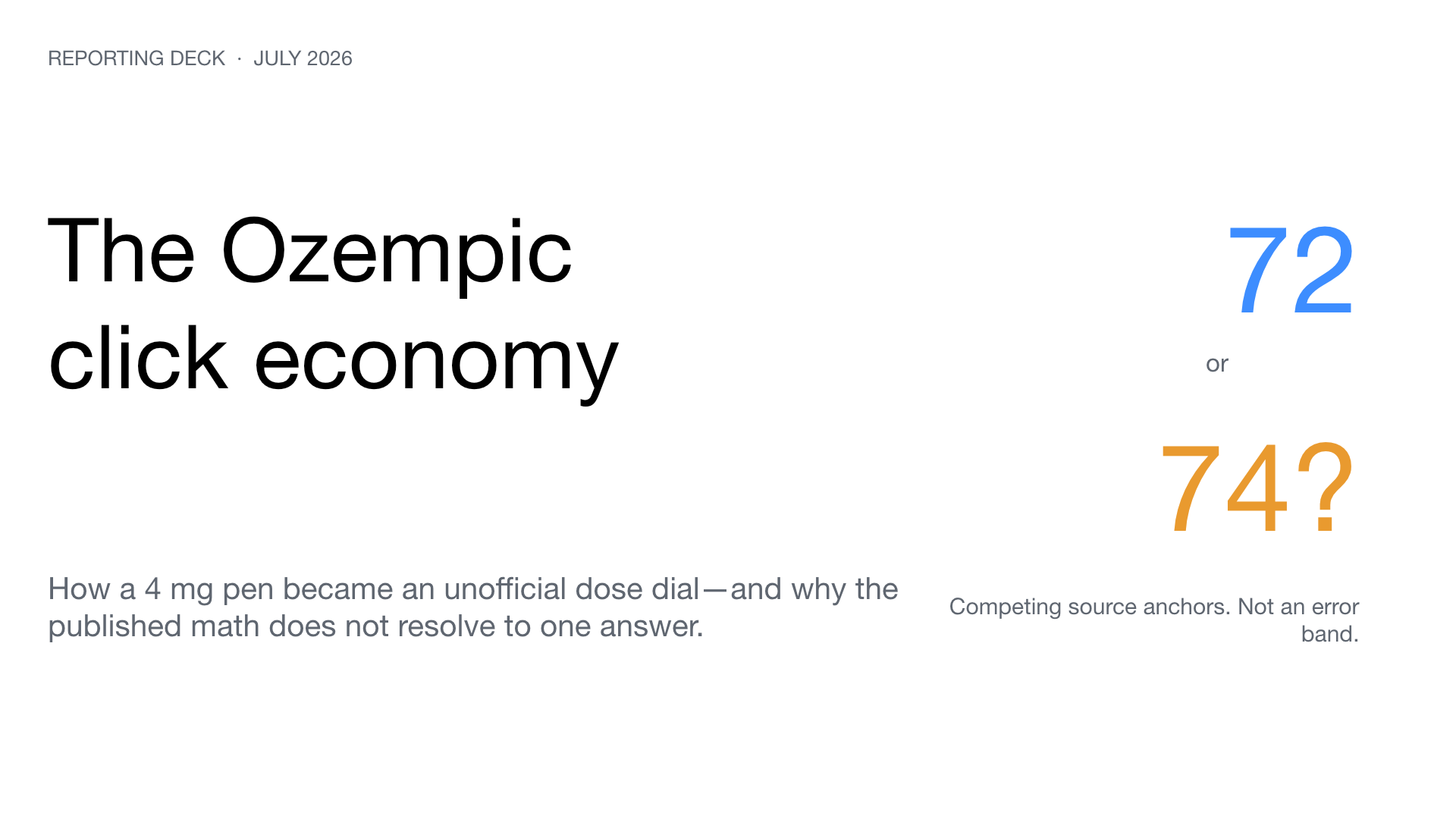
Cover slide titled The Ozempic click economy, contrasting 72 and 74 click claims.
01 · Scope and central conflictFull-size image ↗
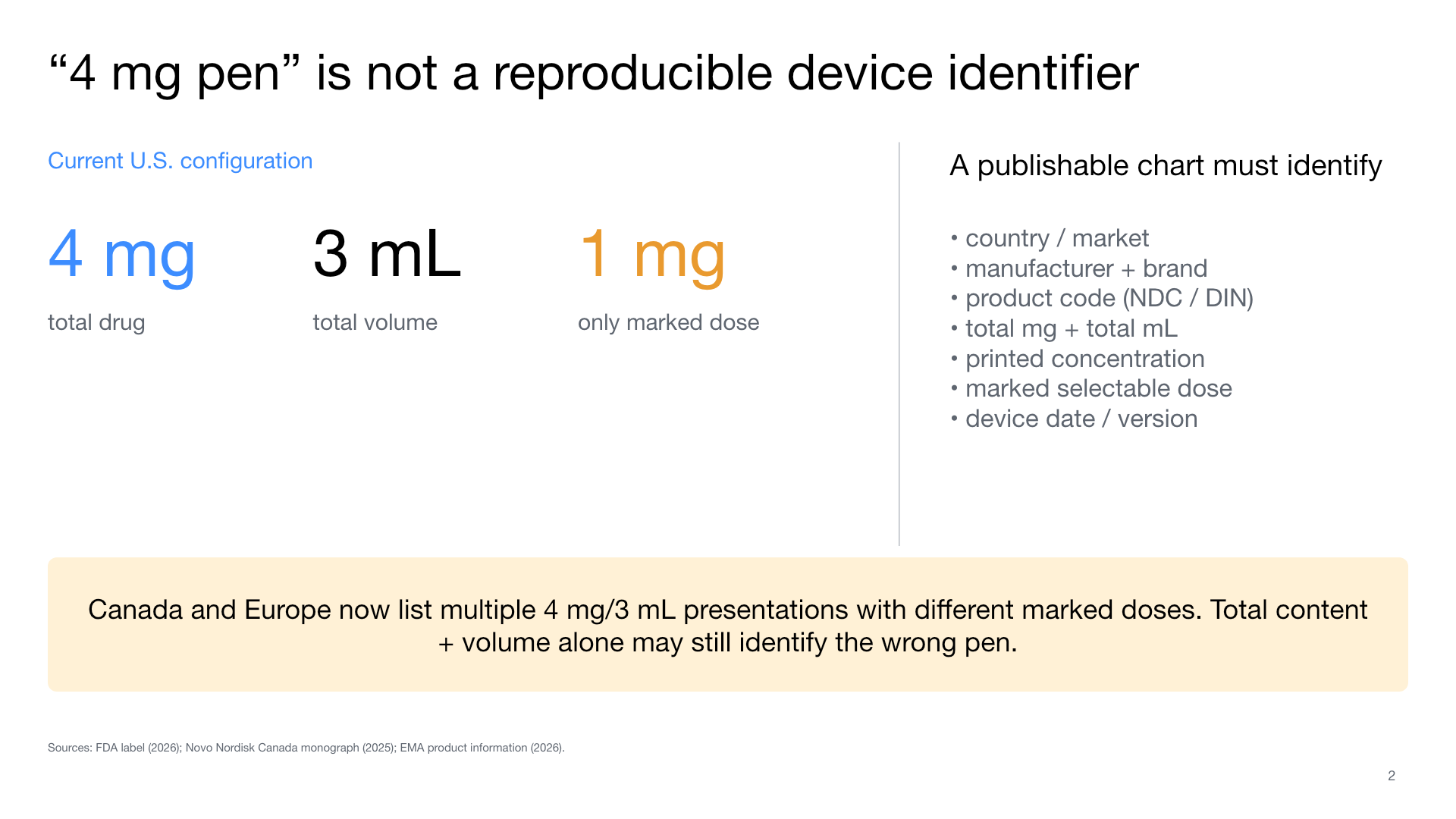
Slide explaining why the phrase 4 mg pen is not a reproducible device identifier.
02 · Device identityFull-size image ↗
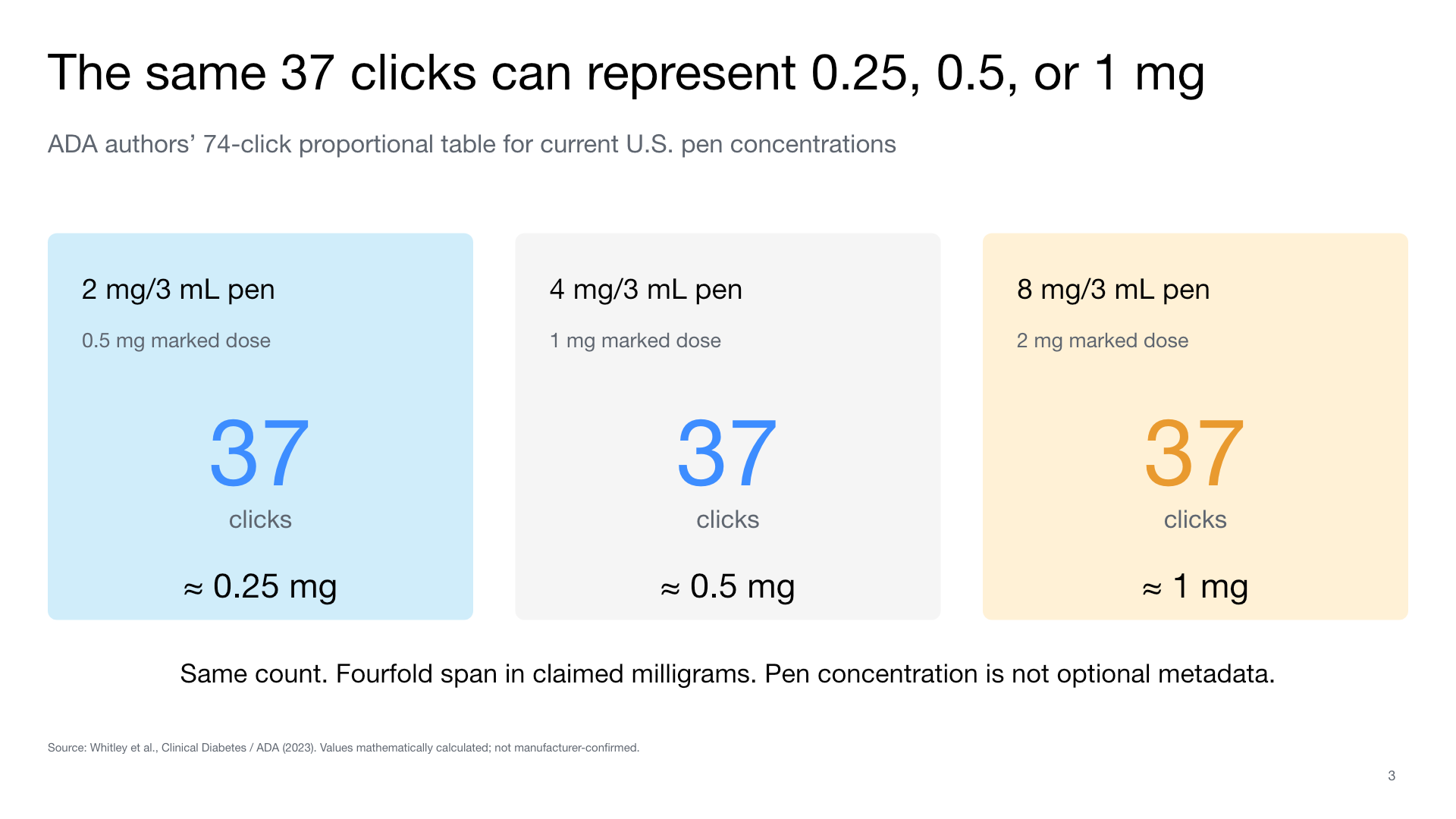
Slide showing how 37 clicks can imply 0.25, 0.5, or 1 milligram across different pen concentrations.
03 · Cross-pen trapFull-size image ↗
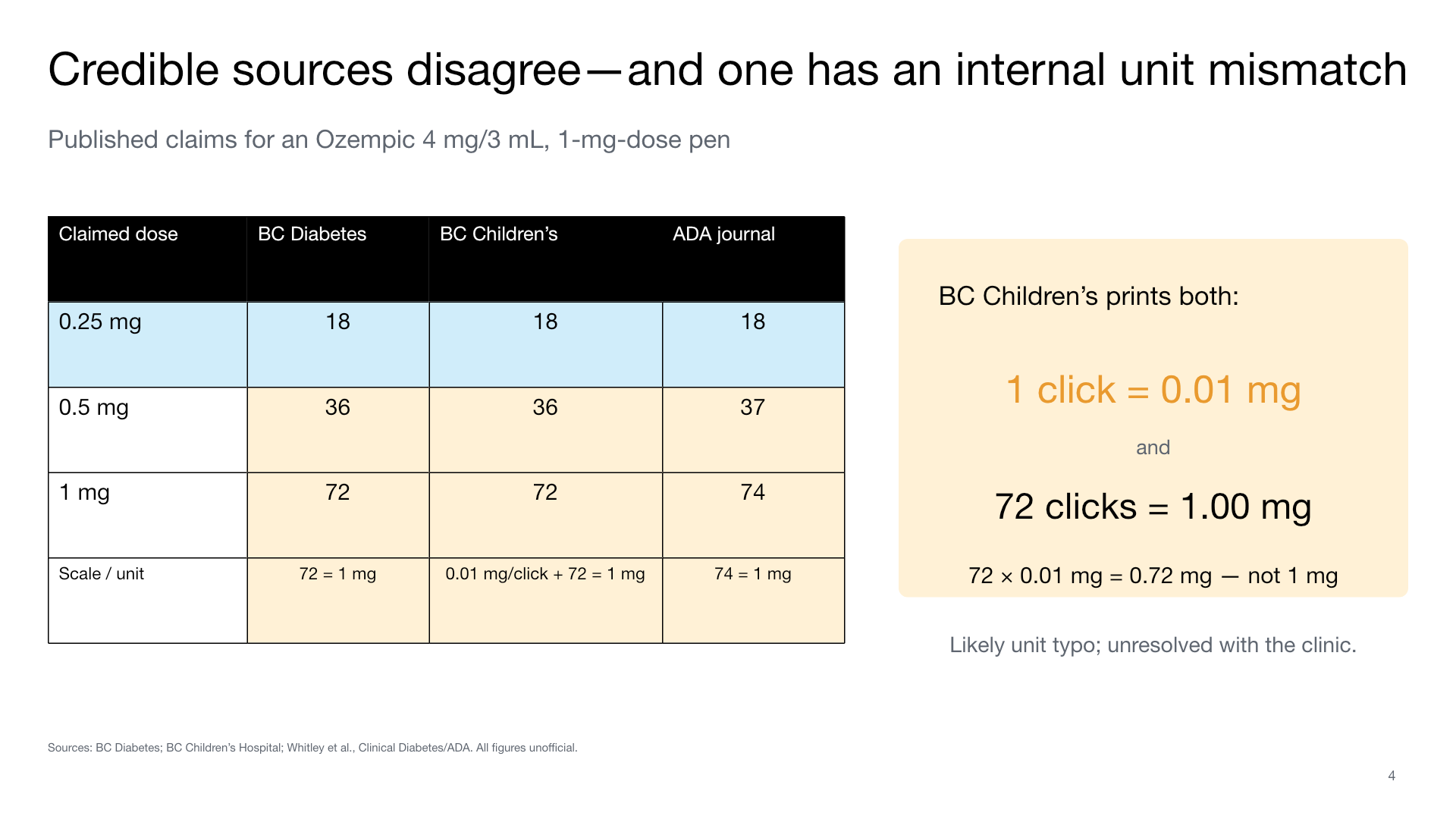
Comparison table of click claims from BC Diabetes, BC Children's Hospital, and an ADA journal article.
04 · Source disagreementFull-size image ↗
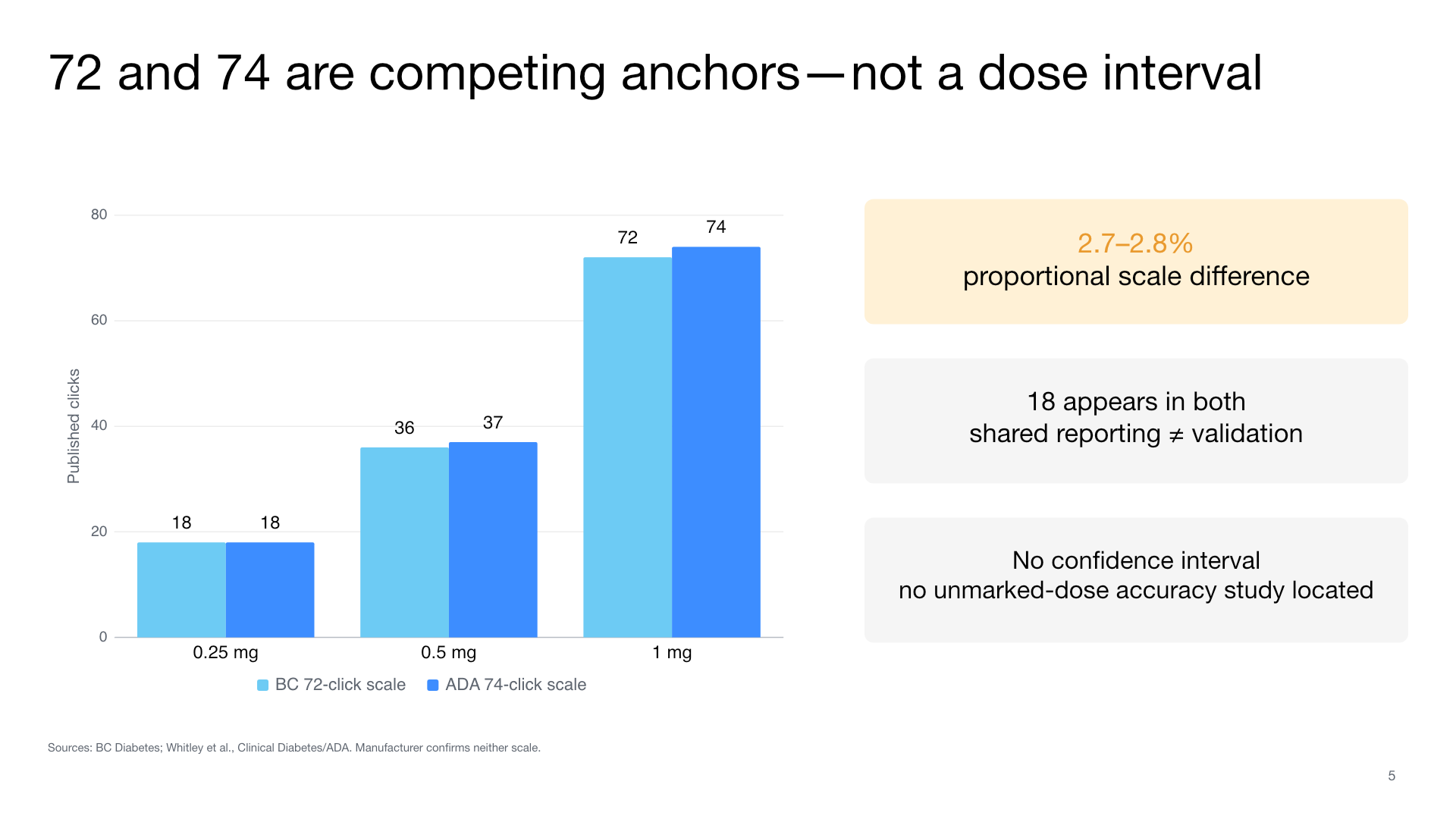
Bar chart comparing 18, 36, and 72 click claims with 18, 37, and 74 claims.
05 · 72 versus 74Full-size image ↗
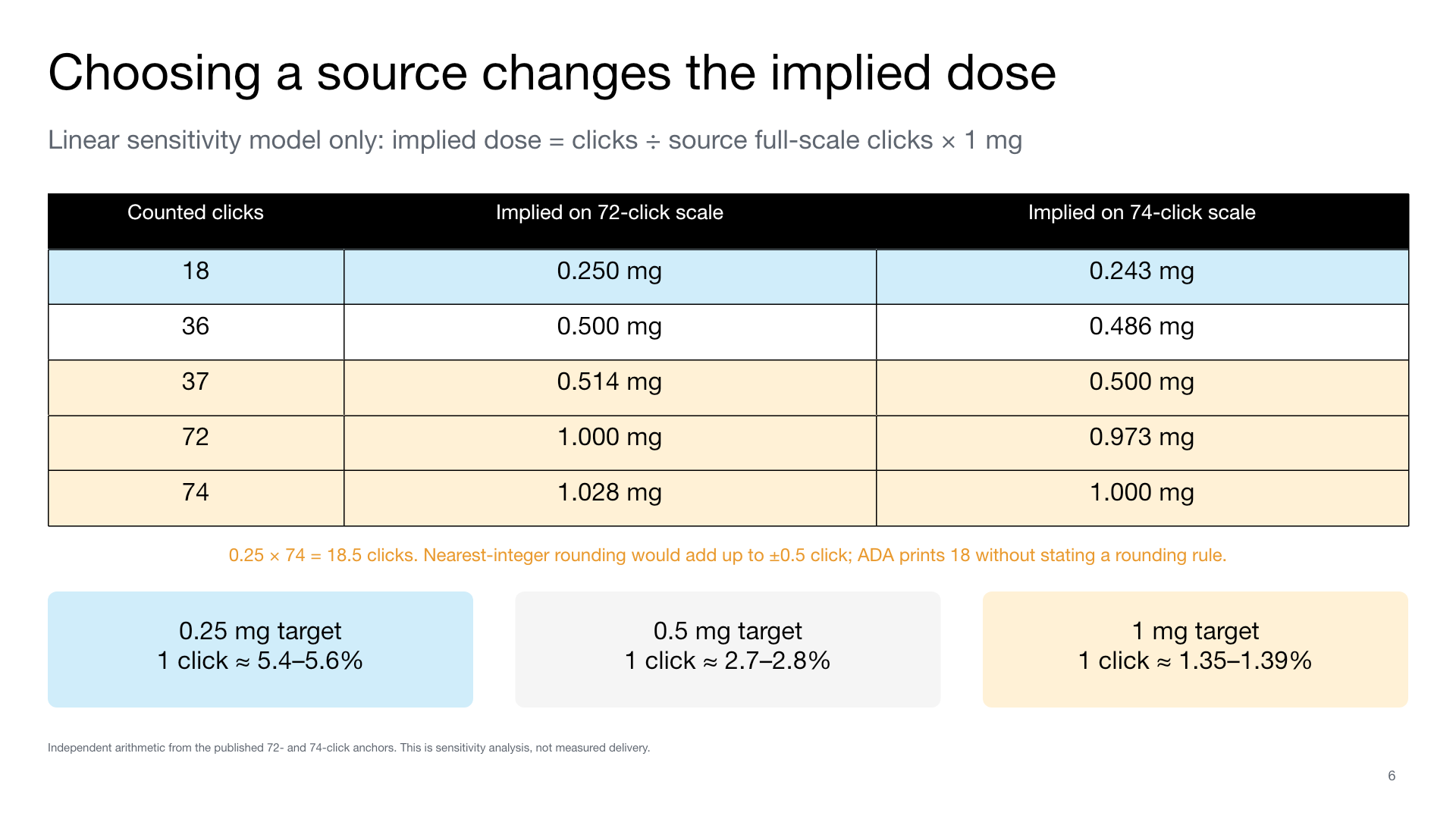
Sensitivity table showing implied dose differences under 72-click and 74-click assumptions.
06 · Sensitivity modelFull-size image ↗
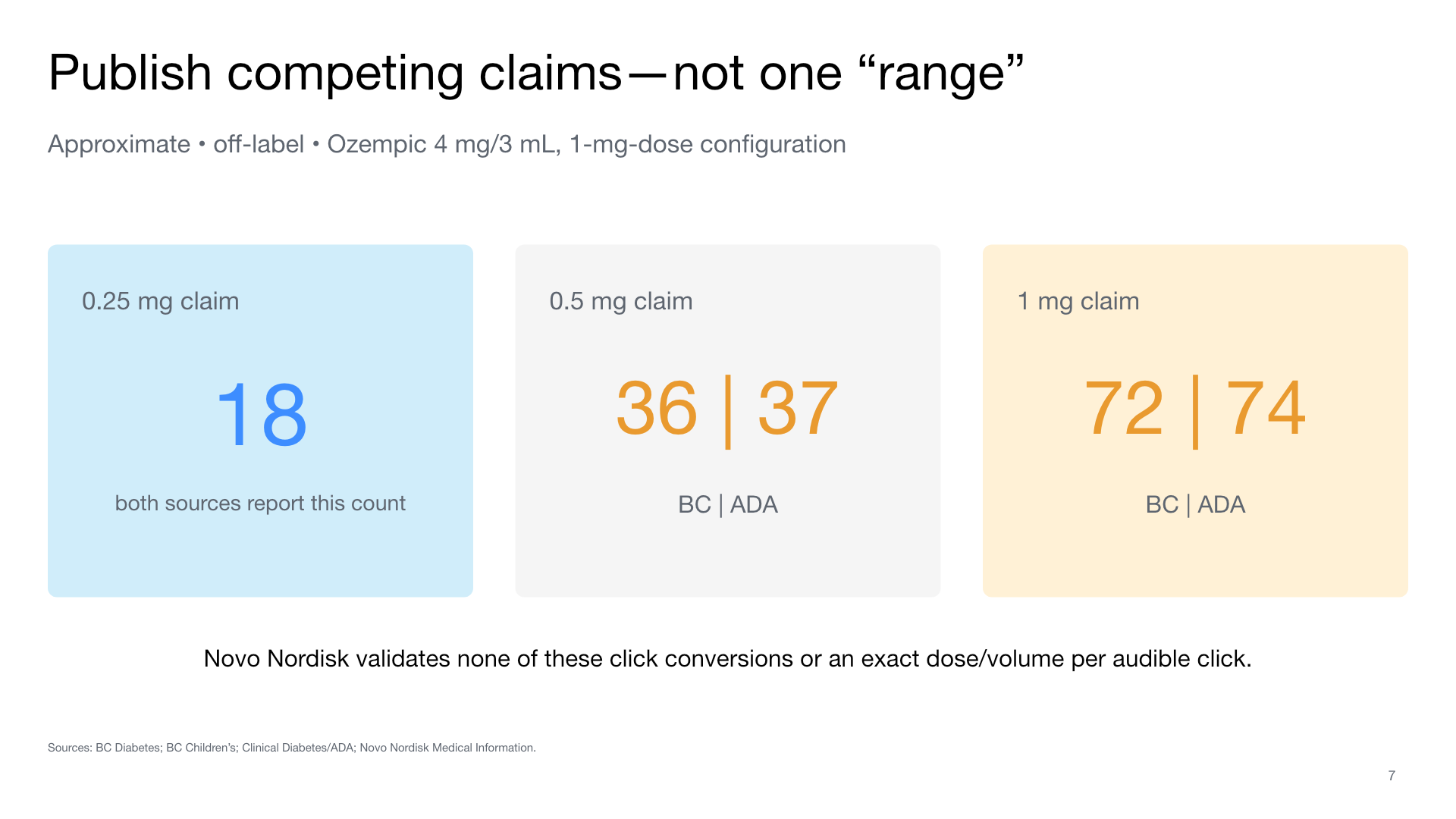
Summary of competing unofficial click-count claims: 18, 36 or 37, and 72 or 74.
07 · Published claimsFull-size image ↗
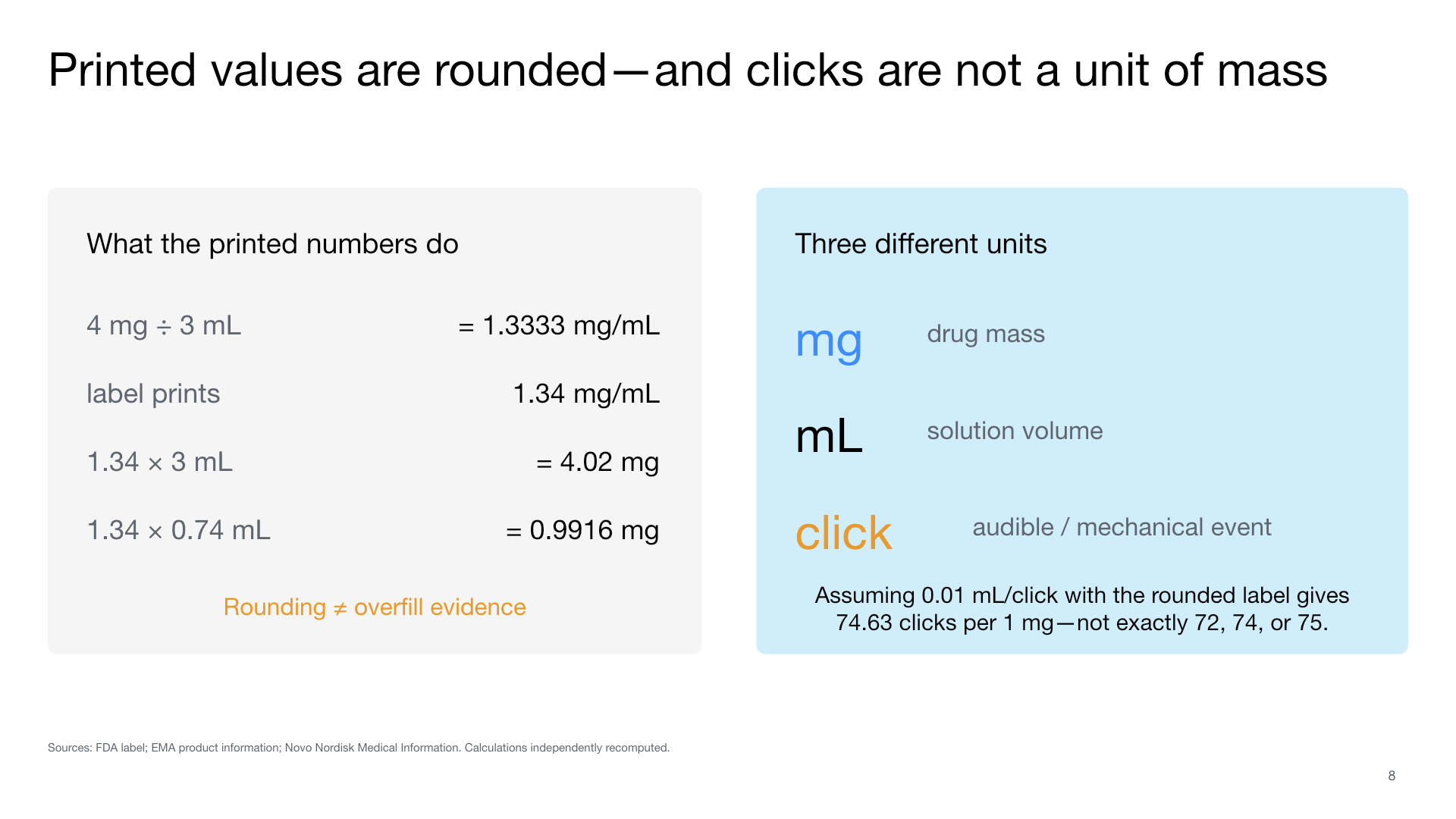
Dimensional analysis slide distinguishing milligrams, milliliters, and mechanical clicks and showing label rounding.
08 · Units and roundingFull-size image ↗
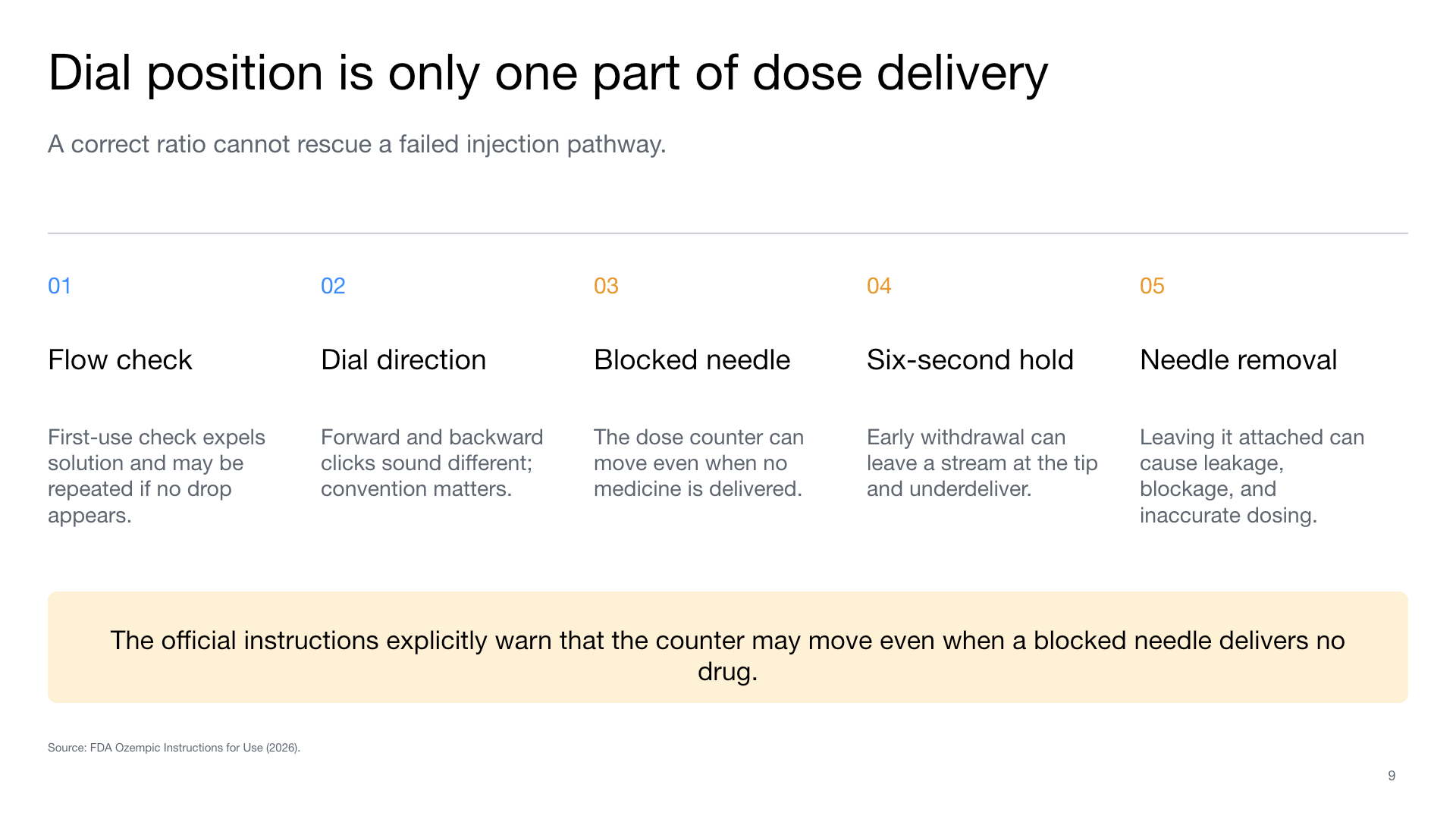
Five-step injection pathway: flow check, dial direction, blocked needle, six-second hold, and needle removal.
09 · Delivery pathwayFull-size image ↗
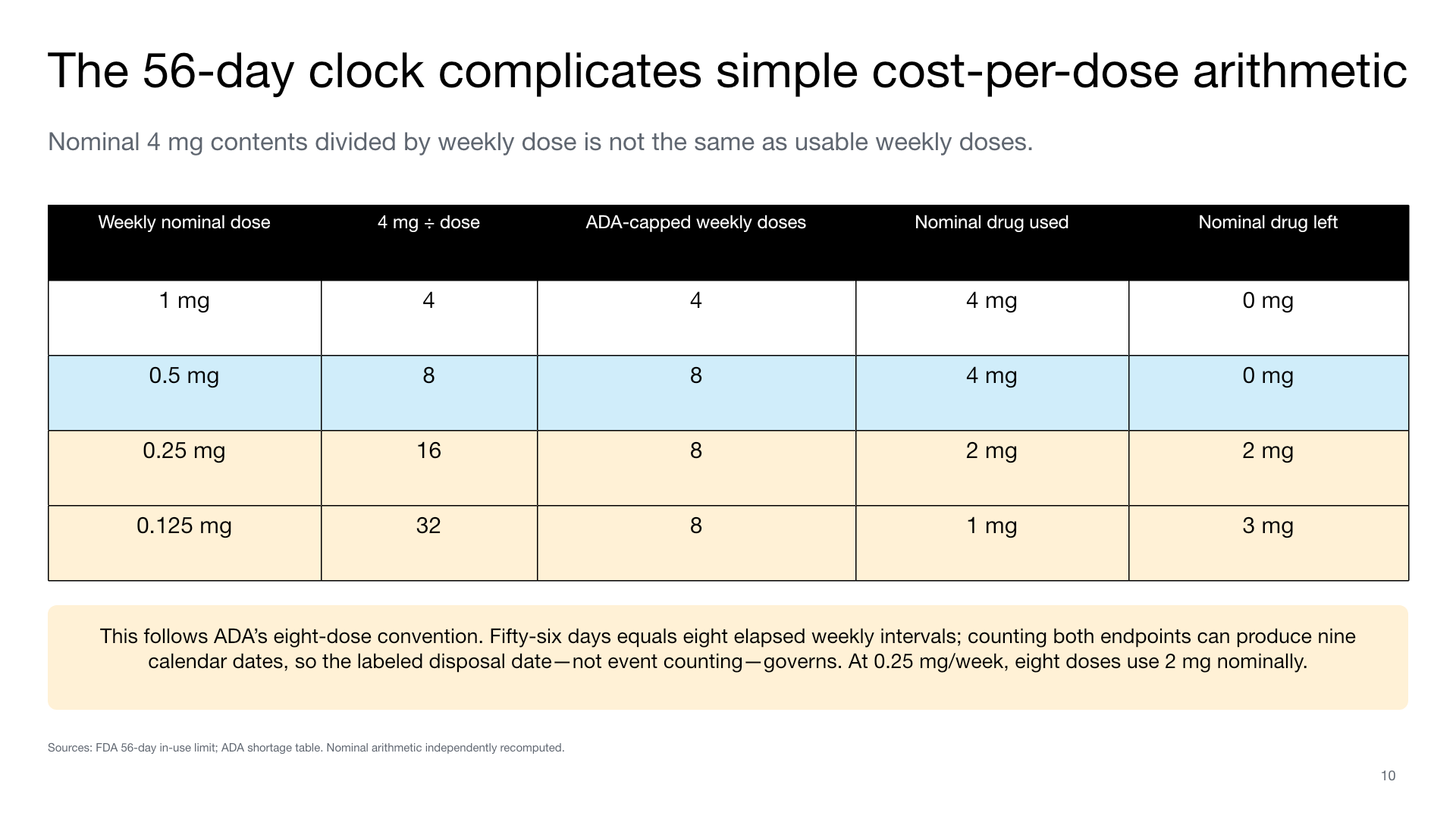
Table comparing nominal doses, pen contents, an eight-dose convention, and drug remaining after 56 days.
10 · Storage and costFull-size image ↗
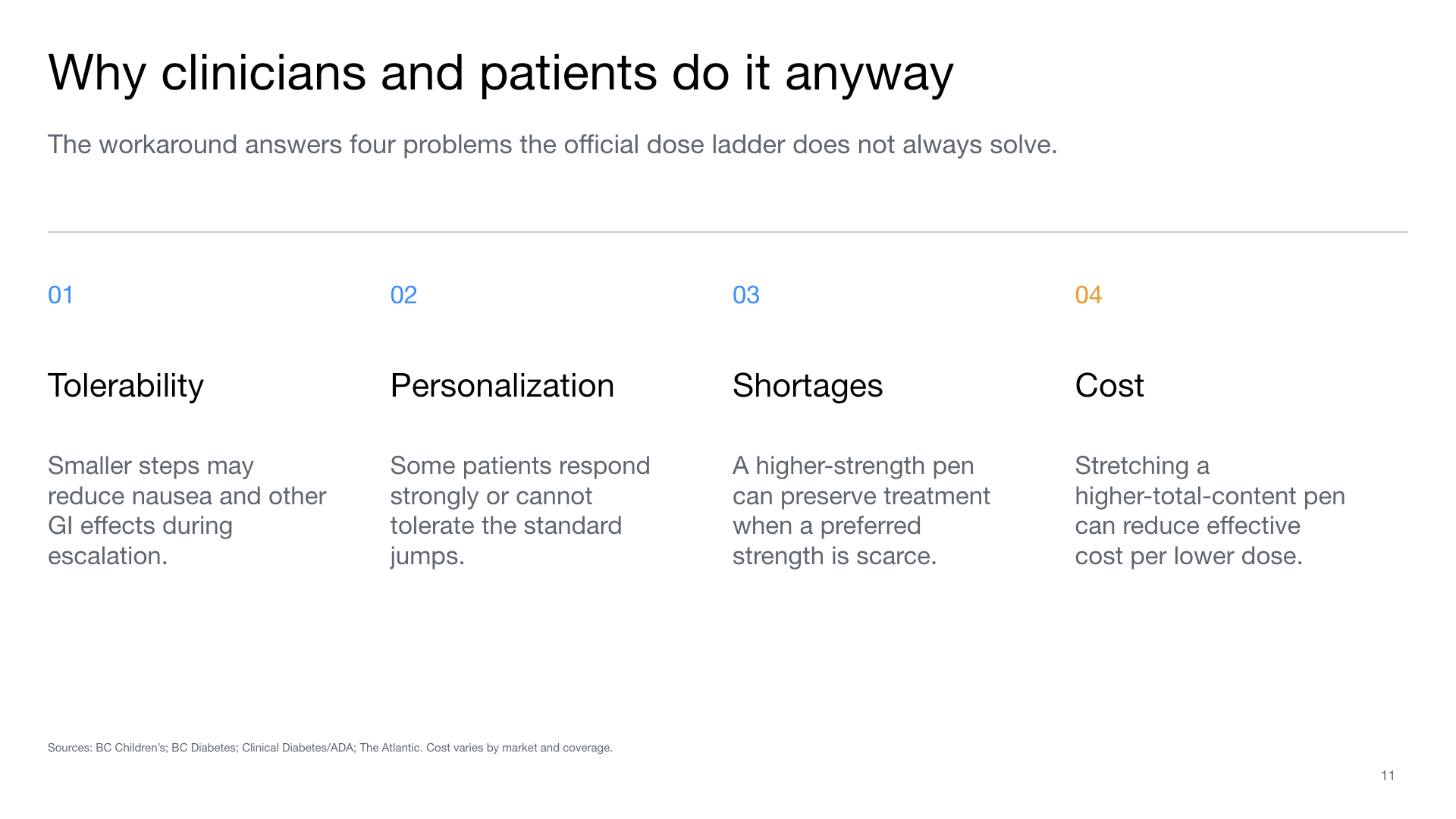
Four reasons clinicians and patients use click counting: tolerability, personalization, shortages, and cost.
11 · Why people do itFull-size image ↗
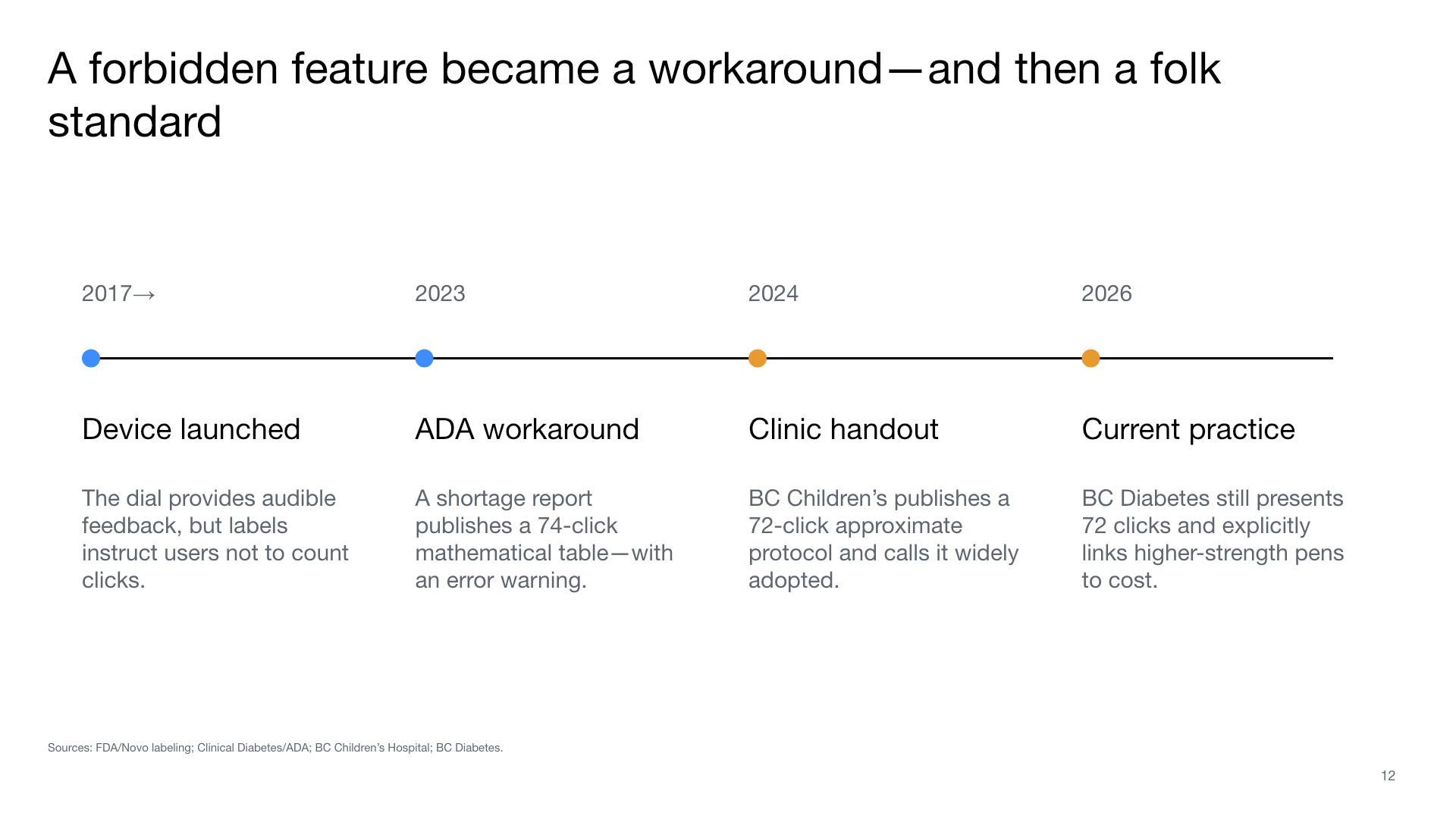
Timeline from device launch through the 2023 ADA workaround, a 2024 clinic handout, and current practice.
12 · Viral timelineFull-size image ↗
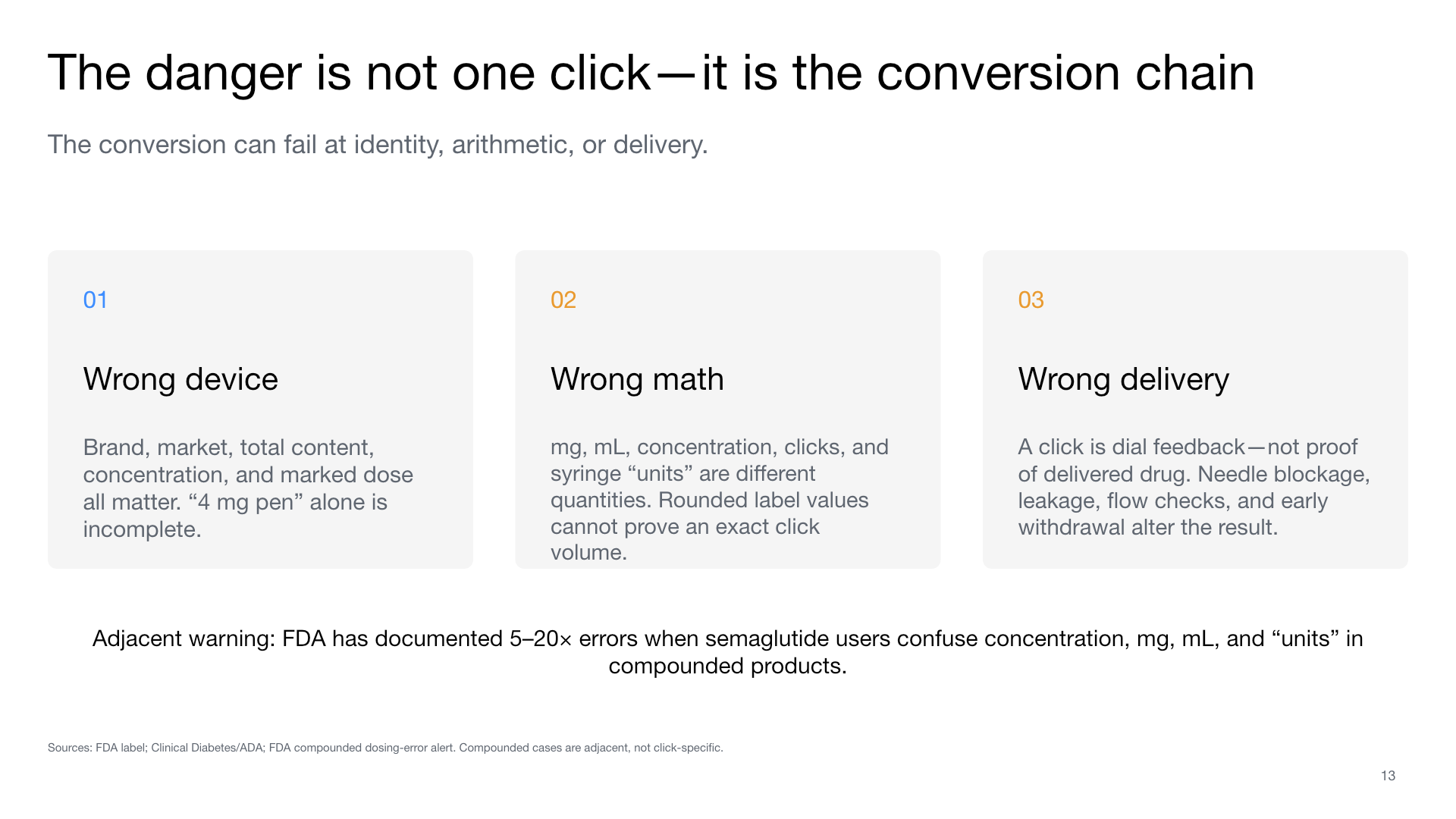
Risk chain showing wrong device, wrong math, and wrong delivery as separate failure points.
13 · Conversion chainFull-size image ↗
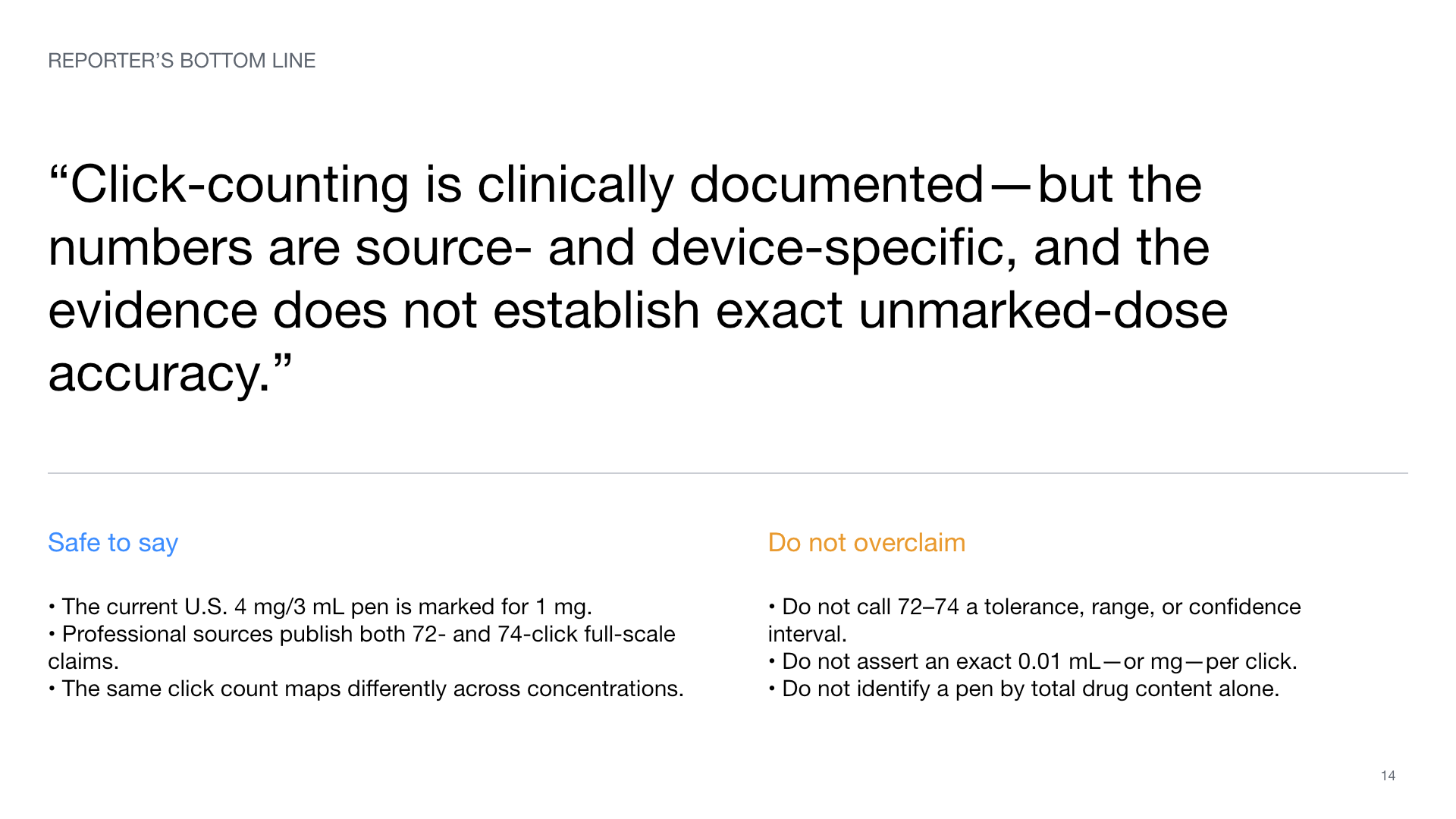
Reporter's bottom line on click counting, source specificity, device specificity, and lack of exact unmarked-dose validation.
14 · Reporter’s bottom lineFull-size image ↗
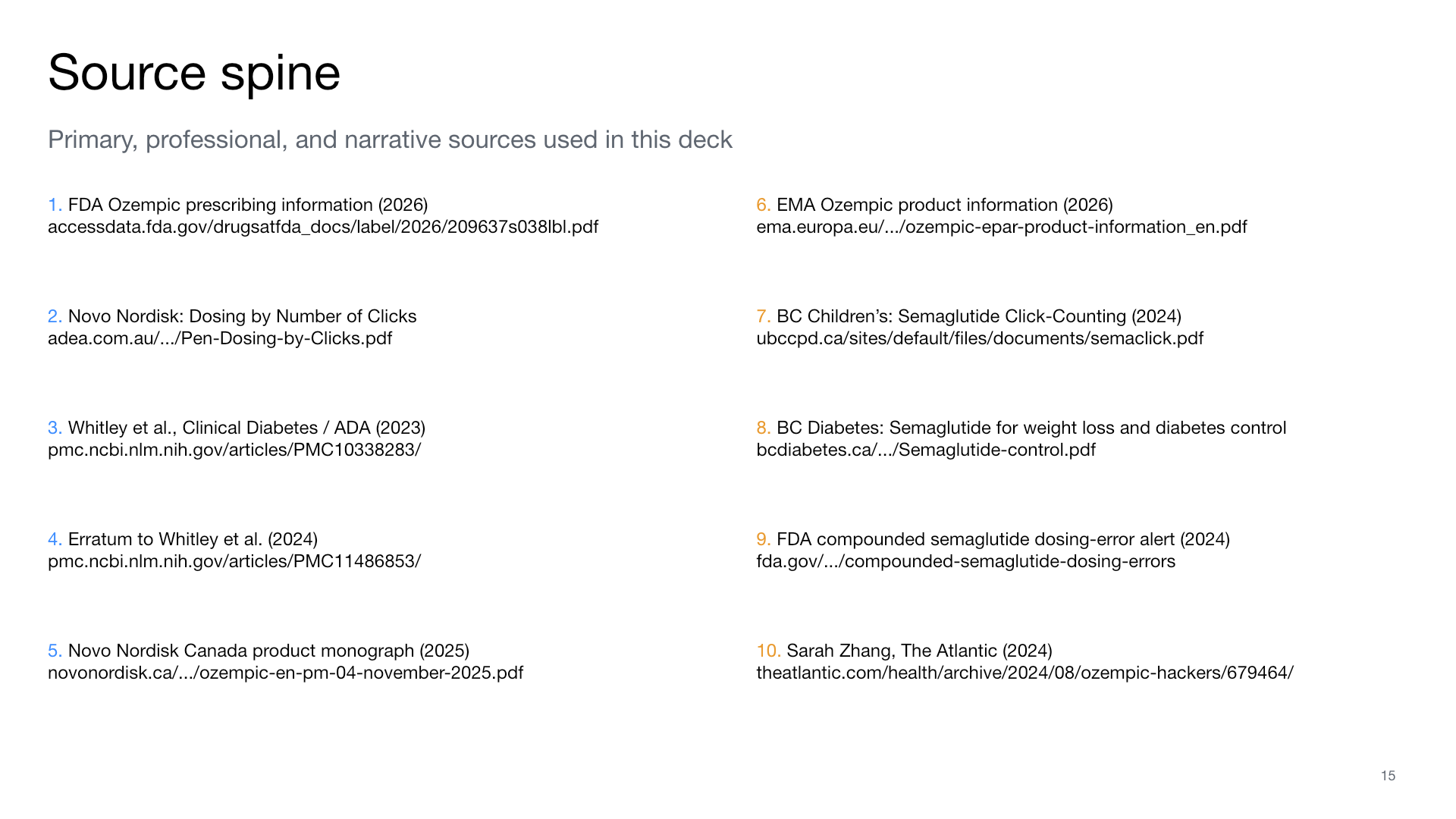
Source spine listing regulatory, manufacturer, professional, and narrative sources used in the deck.
15 · Source spineFull-size image ↗

Clickable source index

The evidence spine

Source tiers are deliberately visible. Regulatory and manufacturer documents establish labeled devices and instructions; professional sources establish that unofficial click-counting has been published; narrative reporting documents its wider culture.

Tier 1 · Primary / official

FDA, EMA, Health Canada/Novo monographs, and manufacturer medical information.

Tier 2 · Professional

Peer-reviewed clinical literature and named health-system or specialist-clinic handouts.

Tier 3 · Narrative

Reporting used to describe virality, incentives, and public behavior—not to validate dose accuracy.

1. FDA Ozempic prescribing information (2026)Tier 1 · Official 2. Novo Nordisk: “Dosing by Number of Clicks”Tier 1 · Manufacturer medical information 3. Whitley et al., Clinical Diabetes (2023)Tier 2 · Peer reviewed 4. Erratum to Whitley et al. (2024)Tier 2 · Correction 5. Novo Nordisk Canada product monographTier 1 · Official 6. EMA Ozempic product informationTier 1 · Official 7. BC Children’s “Semaglutide Click-Counting”Tier 2 · Clinic handout 8. BC Diabetes semaglutide handoutTier 2 · Clinical practice document 9. FDA compounded-semaglutide dosing-error alertTier 1 · Adjacent safety evidence 10. Sarah Zhang, The Atlantic (2024)Tier 3 · Narrative reporting

Download the reporting package